The Story
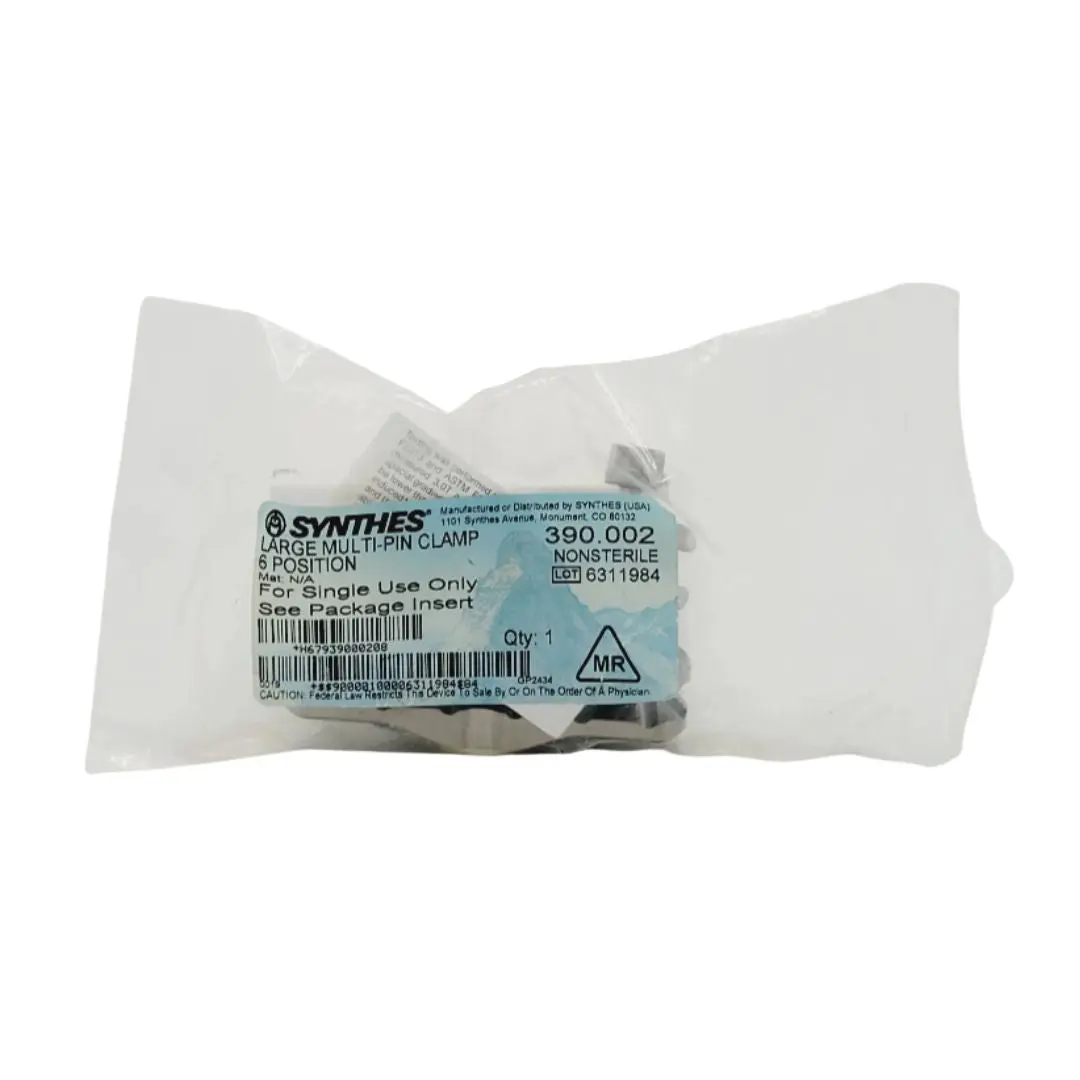
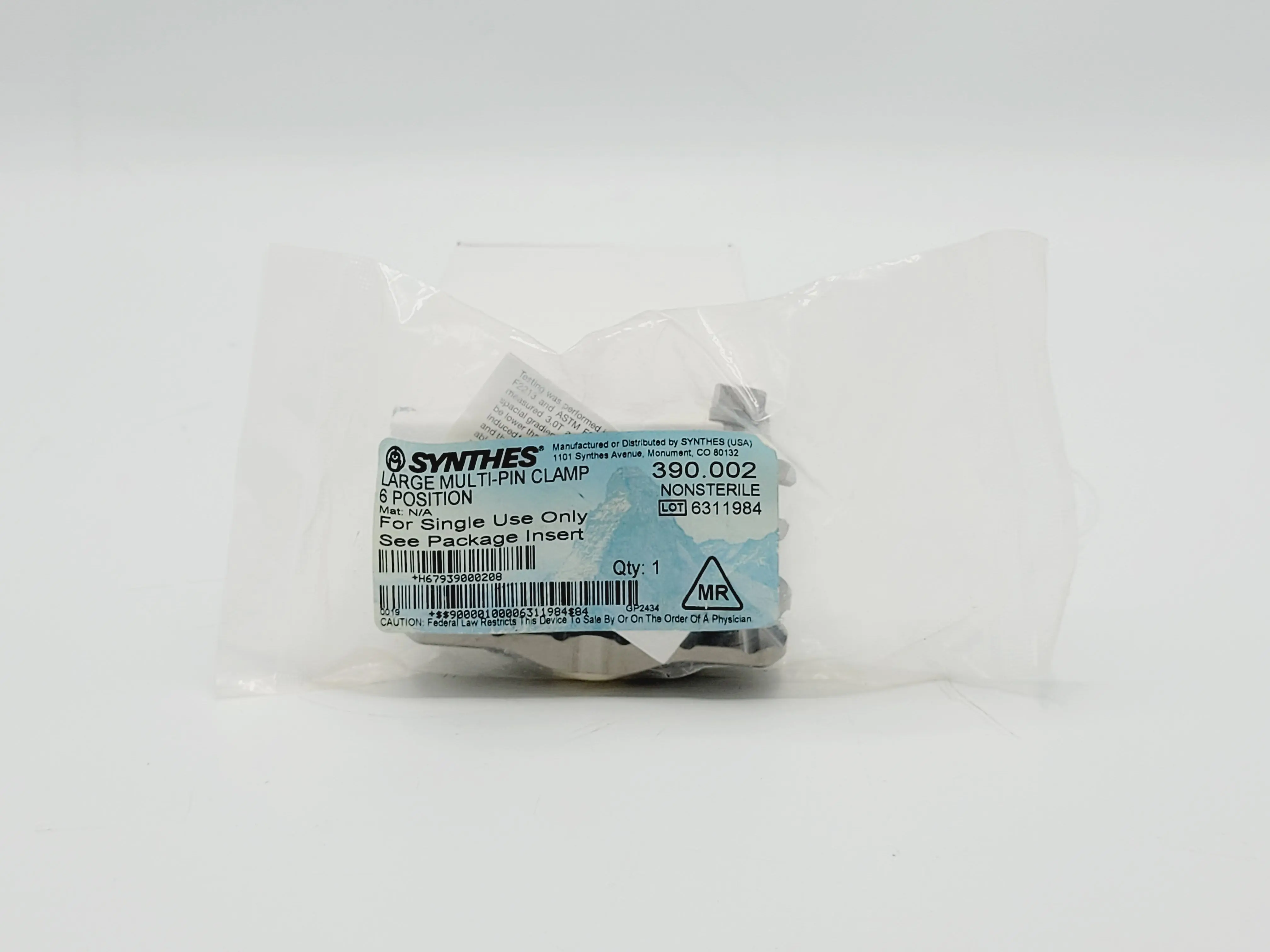
Synthes 390.002 Large Ex-Fix Multi-Pin Clamp 6-Position
• Model: 390.002
• Large
• 6 Positions
A component of an external fixation system intended to be used to stabilize a fractured bone/joint. It may be a specially designed frame, clamp, rod, pin, rod-to-rod coupling, rod-to-pin coupling, post, fastener, wire, bolt, washer, nut, hinge, ring, socket, bar, screw, or other device. This is a single-use device.
The Synthes 390.002 Large Multi‑Pin Clamp is a robust orthopedic accessory designed for use in large external fixation constructs. With six configurable pin positions, this clamp allows surgeons to accommodate multiple fixation pins in diverse alignments—providing enhanced flexibility when stabilizing complex fractures of long bones or pelvic structures. Its large size ensures strong mechanical integrity, suitable for high-load-bearing anatomical regions.
A significant advantage of this component is its MR‑Safe classification, meaning it presents no known hazards in MRI environments regardless of settings. This is particularly valuable in postoperative management, enabling patients to undergo necessary MRI imaging without hardware removal or workflow delays—facilitating smoother diagnostic processes and greater clinical safety.
Details & Craftsmanship
Every detail has been carefully considered to bring you the perfect product.
Description
Synthes 390.002 Large Ex-Fix Multi-Pin Clamp 6-Position
• Model: 390.002
• Large
• 6 Positions
A component of an external fixation system intended to be used to stabilize a fractured bone/joint. It may be a specially designed frame, clamp, rod, pin, rod-to-rod coupling, rod-to-pin coupling, post, fastener, wire, bolt, washer, nut, hinge, ring, socket, bar, screw, or other device. This is a single-use device.
The Synthes 390.002 Large Multi‑Pin Clamp is a robust orthopedic accessory designed for use in large external fixation constructs. With six configurable pin positions, this clamp allows surgeons to accommodate multiple fixation pins in diverse alignments—providing enhanced flexibility when stabilizing complex fractures of long bones or pelvic structures. Its large size ensures strong mechanical integrity, suitable for high-load-bearing anatomical regions.
A significant advantage of this component is its MR‑Safe classification, meaning it presents no known hazards in MRI environments regardless of settings. This is particularly valuable in postoperative management, enabling patients to undergo necessary MRI imaging without hardware removal or workflow delays—facilitating smoother diagnostic processes and greater clinical safety.