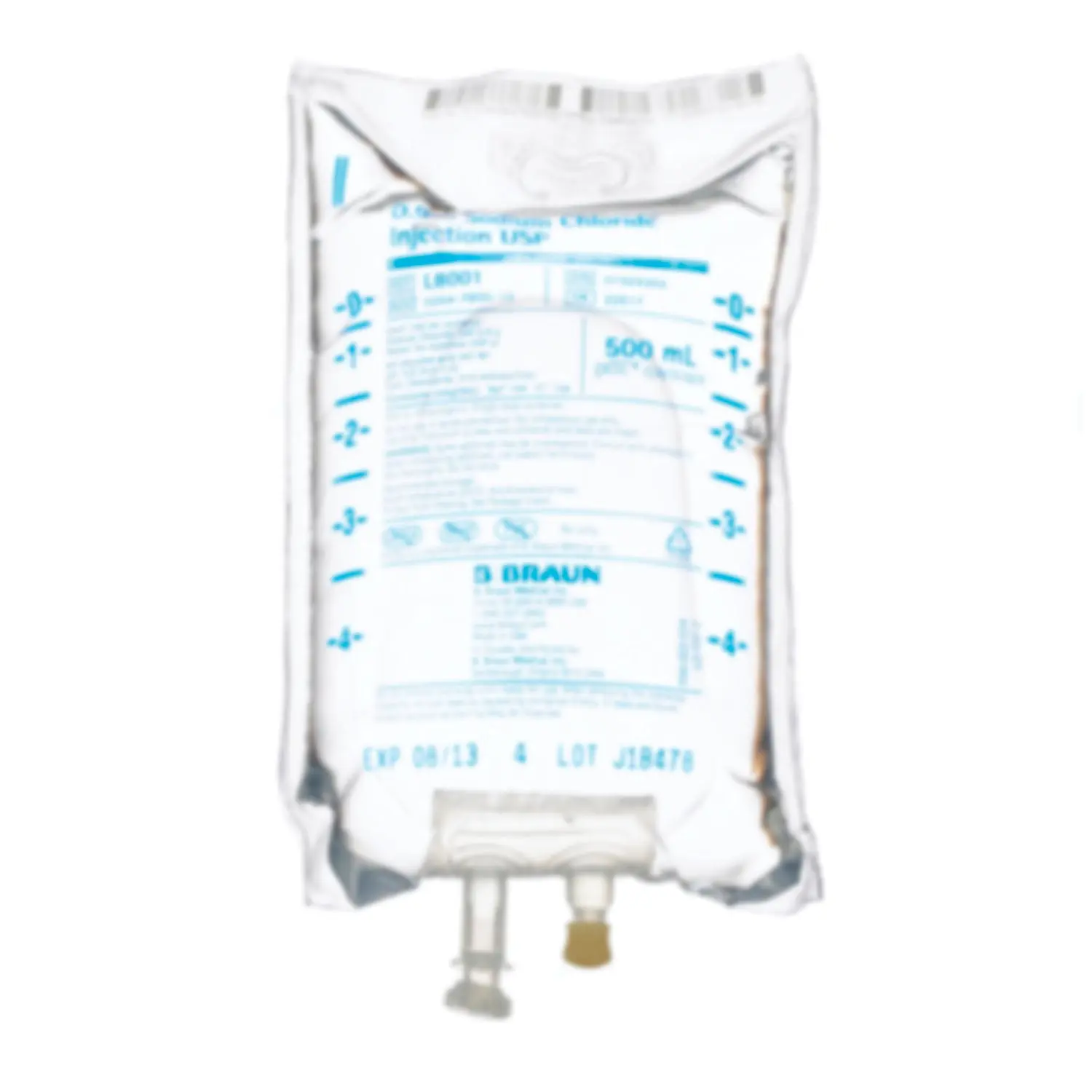
B BRAUN L8051 SODIUM CHLORIDE INJECTIONS USP Sodium Chloride Injections, 3%, 500mL, EXCEL® Container (Hypertonic), 24/cs Max weekly quantity allowed: 10
B BRAUN L8051 SODIUM CHLORIDE INJECTIONS USP Sodium Chloride Injections, 3%, 500mL, EXCEL® Container (Hypertonic), 24/cs Max weekly quantity allowed: 10
Original: $210.00
-65%$210.00
$73.50The Story
B BRAUN L8051 SODIUM CHLORIDE INJECTIONS USP Sodium Chloride Injections, 3%, 500mL, EXCEL® Container (Hypertonic), 24/cs Max weekly quantity allowed: 10
• Model: L8051
• Volume: 500 mL
• Case of 24
EXCEL & PAB, the only PVC-free, DEHP-free containers with a full range of basic IV solutions. EXCEL & PAB eliminate the risk of plasticizer toxicity, reduces the risk of sub-therapeutic dosing and facilitate inspection of admixtures.
The B. Braun L8051 (3% Sodium Chloride Injection USP) in the 500 mL EXCEL® bag is a hypertonic intravenous solution designed to deliver a concentrated dose of sodium and chloride—approximately 513 mEq each per liter—in an easily administered format. The 3% strength makes it suitable for clinical scenarios where a marked electrolyte deficit exists, or where rapid restoration of sodium and chloride is paramount (for example, in postoperative states, severe salt depletion, or certain neurologic conditions requiring hypertonic therapy). Given its hyperosmolar nature (~1,030 mOsmol/L), it must be used with caution, infused slowly, and under close patient monitoring for fluid‐overload risk and potential pulmonary edema.
Material and container considerations were clearly addressed: the EXCEL® bag format ensures flexibility in handling, and the exclusion of PVC, DEHP, and natural rubber latex aligns with modern institutional preferences (reducing risk of plasticizer exposure and latex allergen sensitization). The specific gravity of ~1.021 highlights the denser nature of the solution compared to isotonic fluids, and the packaging in 24‐unit cases supports hospital inventory systems. From a workflow standpoint, pharmacy and infusion teams benefit from ready‐to‐use packaging that avoids extra steps of dilution or mixing, though staff must remain vigilant regarding the hypertonic nature of the solution and the clinical implications of high sodium loads in patients with compromised cardiac or renal status.
Practically speaking, this product fits into the broader IV fluid management toolkit by offering a targeted hypertonic solution that can be integrated into hospital protocols for acute electrolyte management. Its use should be guided by institutional policies, nursing protocols, and monitoring standards (electrolytes, fluid balance, cardiac/renal status). Procurement teams should note the case size (24 per case) and the weight/size of each case for storage planning; the product also tends to require controlled ordering due to its higher concentration and specific use cases versus standard isotonic fluids. Overall, the L8051 offers a robust, high‐concentration sodium chloride option in a material-safe, workflow‑friendly bag format for appropriate clinical situations.
Description
B BRAUN L8051 SODIUM CHLORIDE INJECTIONS USP Sodium Chloride Injections, 3%, 500mL, EXCEL® Container (Hypertonic), 24/cs Max weekly quantity allowed: 10
• Model: L8051
• Volume: 500 mL
• Case of 24
EXCEL & PAB, the only PVC-free, DEHP-free containers with a full range of basic IV solutions. EXCEL & PAB eliminate the risk of plasticizer toxicity, reduces the risk of sub-therapeutic dosing and facilitate inspection of admixtures.
The B. Braun L8051 (3% Sodium Chloride Injection USP) in the 500 mL EXCEL® bag is a hypertonic intravenous solution designed to deliver a concentrated dose of sodium and chloride—approximately 513 mEq each per liter—in an easily administered format. The 3% strength makes it suitable for clinical scenarios where a marked electrolyte deficit exists, or where rapid restoration of sodium and chloride is paramount (for example, in postoperative states, severe salt depletion, or certain neurologic conditions requiring hypertonic therapy). Given its hyperosmolar nature (~1,030 mOsmol/L), it must be used with caution, infused slowly, and under close patient monitoring for fluid‐overload risk and potential pulmonary edema.
Material and container considerations were clearly addressed: the EXCEL® bag format ensures flexibility in handling, and the exclusion of PVC, DEHP, and natural rubber latex aligns with modern institutional preferences (reducing risk of plasticizer exposure and latex allergen sensitization). The specific gravity of ~1.021 highlights the denser nature of the solution compared to isotonic fluids, and the packaging in 24‐unit cases supports hospital inventory systems. From a workflow standpoint, pharmacy and infusion teams benefit from ready‐to‐use packaging that avoids extra steps of dilution or mixing, though staff must remain vigilant regarding the hypertonic nature of the solution and the clinical implications of high sodium loads in patients with compromised cardiac or renal status.
Practically speaking, this product fits into the broader IV fluid management toolkit by offering a targeted hypertonic solution that can be integrated into hospital protocols for acute electrolyte management. Its use should be guided by institutional policies, nursing protocols, and monitoring standards (electrolytes, fluid balance, cardiac/renal status). Procurement teams should note the case size (24 per case) and the weight/size of each case for storage planning; the product also tends to require controlled ordering due to its higher concentration and specific use cases versus standard isotonic fluids. Overall, the L8051 offers a robust, high‐concentration sodium chloride option in a material-safe, workflow‑friendly bag format for appropriate clinical situations.