The Story
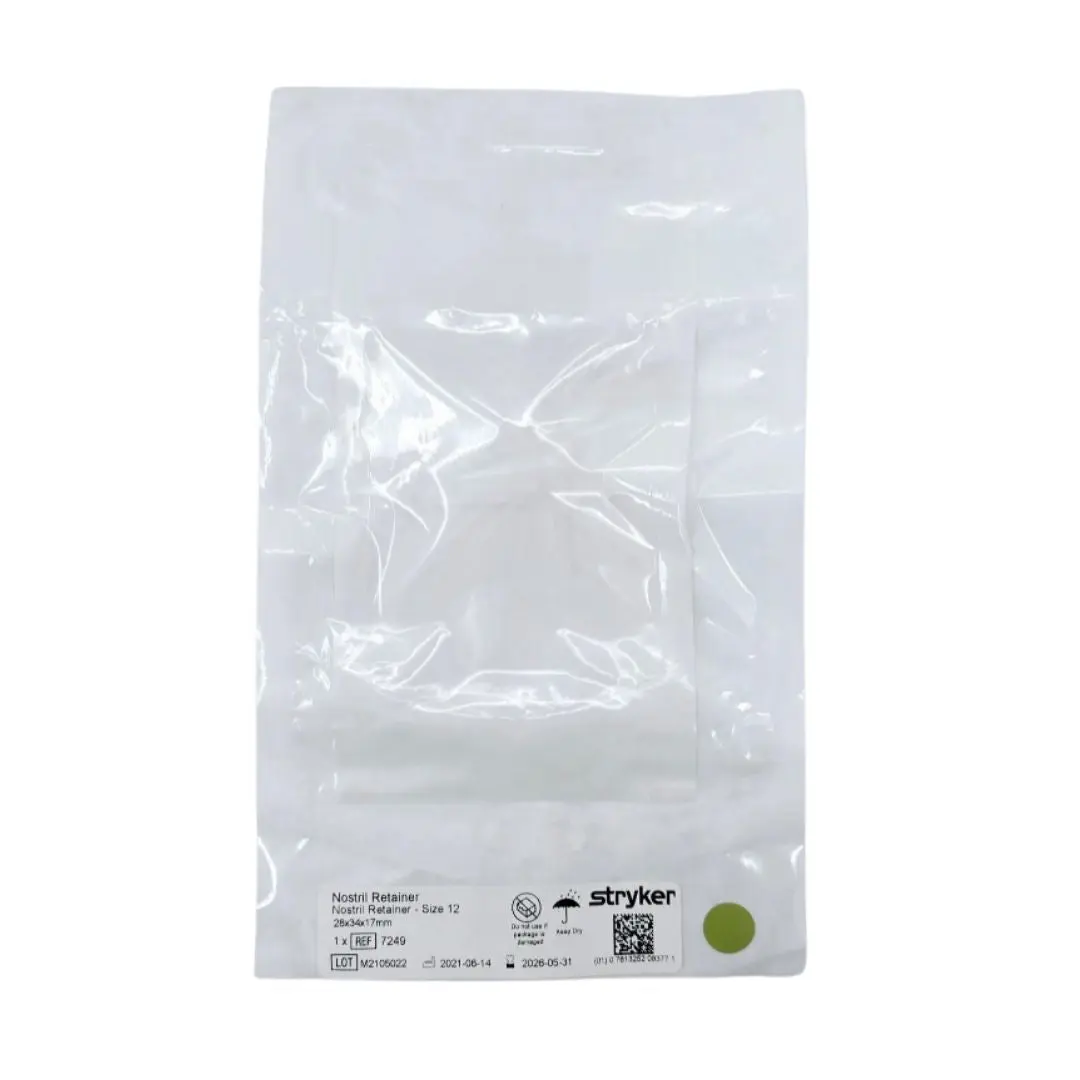
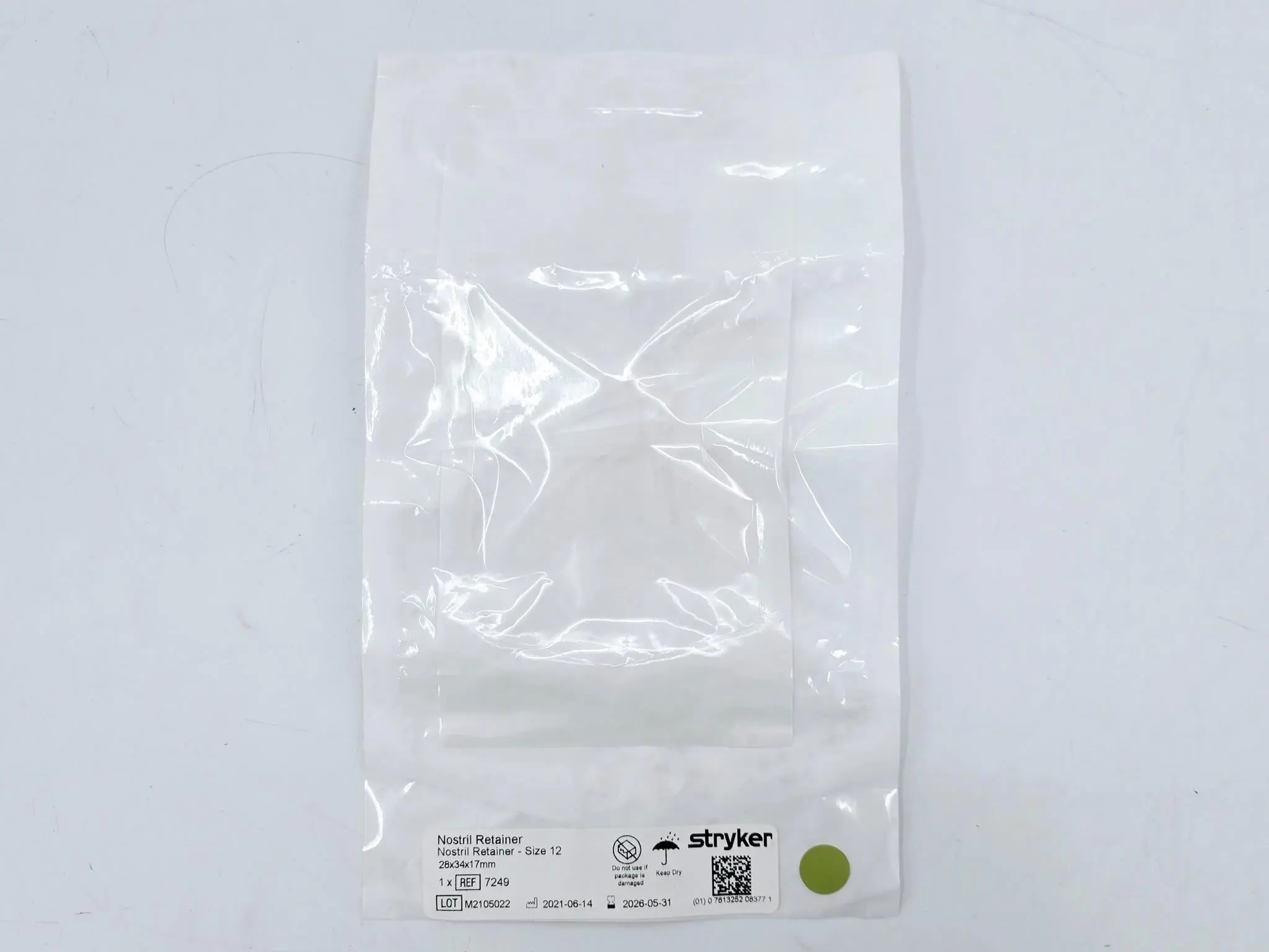
Stryker 7249 Nostril Retainer 28mm x 34mm x 17mm Size 12 (Stryker nostril retainer)
• Model: 7249
• Size 12
This medical supply or implant item is contained within its original manufacturer's packaging.
Stryker nostril retainer
This implant is a porous polyethylene nostril retainer, designed for temporary insertion into the nasal cavity following surgery or trauma. It serves multiple therapeutic purposes: tamponading minor bleeding, maintaining septal alignment, and preventing mucosal adhesions during healing. The size 12 variant (28 × 34 × 17 mm) features symmetric straight wings that support the nostril’s natural shape while providing internal stabilization.
Constructed from non-biodegradable, medical-grade material, the retainer is packaged sterile for single use. Its porous structure offers both mechanical support and fluid compatibility, while its rigid yet smooth design minimizes patient discomfort. Typically, these retainers are left in place for a prescribed period postoperatively, after which they are removed by the physician as healing progresses.

Details & Craftsmanship
Every detail has been carefully considered to bring you the perfect product.
Description
Stryker 7249 Nostril Retainer 28mm x 34mm x 17mm Size 12 (Stryker nostril retainer)
• Model: 7249
• Size 12
This medical supply or implant item is contained within its original manufacturer's packaging.
Stryker nostril retainer
This implant is a porous polyethylene nostril retainer, designed for temporary insertion into the nasal cavity following surgery or trauma. It serves multiple therapeutic purposes: tamponading minor bleeding, maintaining septal alignment, and preventing mucosal adhesions during healing. The size 12 variant (28 × 34 × 17 mm) features symmetric straight wings that support the nostril’s natural shape while providing internal stabilization.
Constructed from non-biodegradable, medical-grade material, the retainer is packaged sterile for single use. Its porous structure offers both mechanical support and fluid compatibility, while its rigid yet smooth design minimizes patient discomfort. Typically, these retainers are left in place for a prescribed period postoperatively, after which they are removed by the physician as healing progresses.