The Story
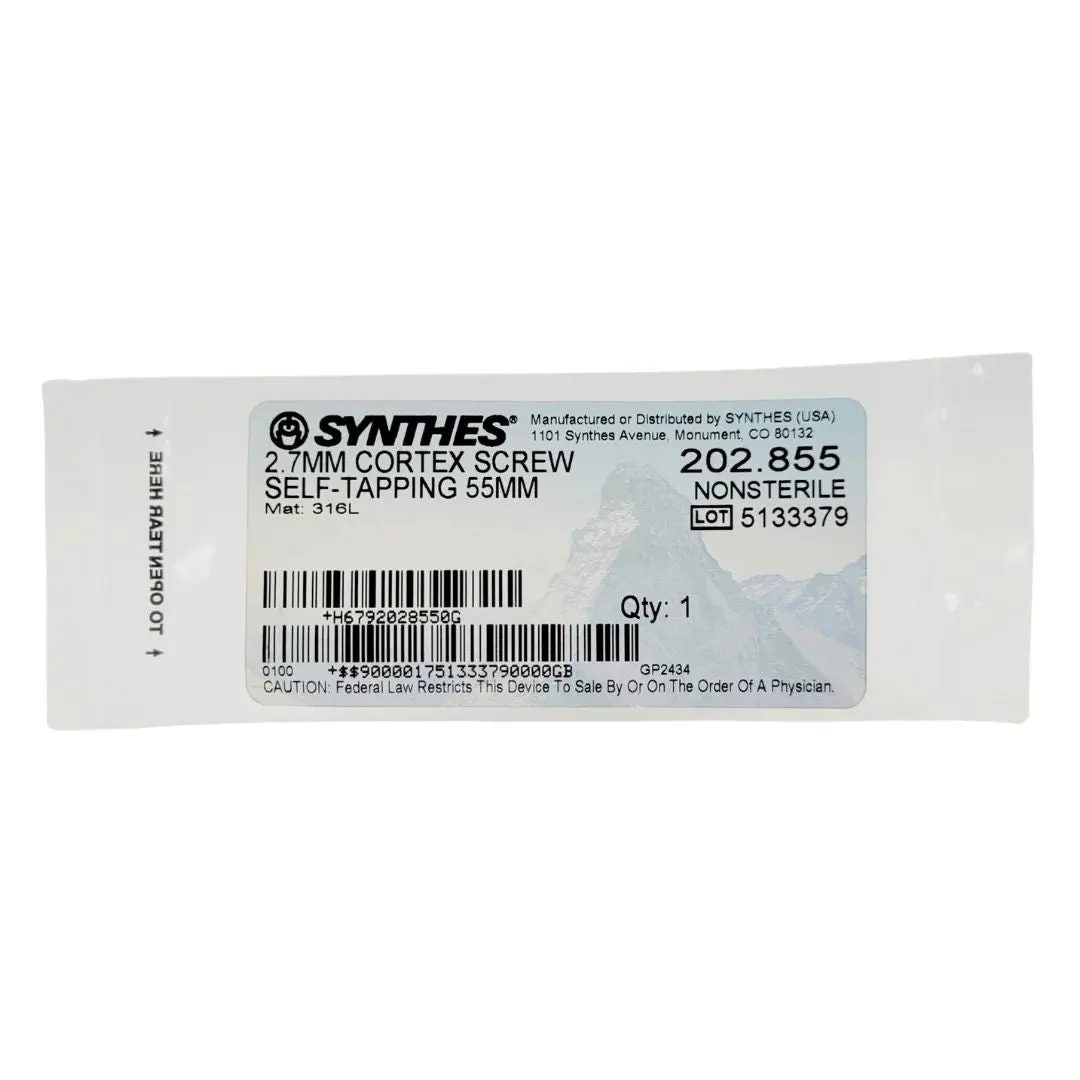
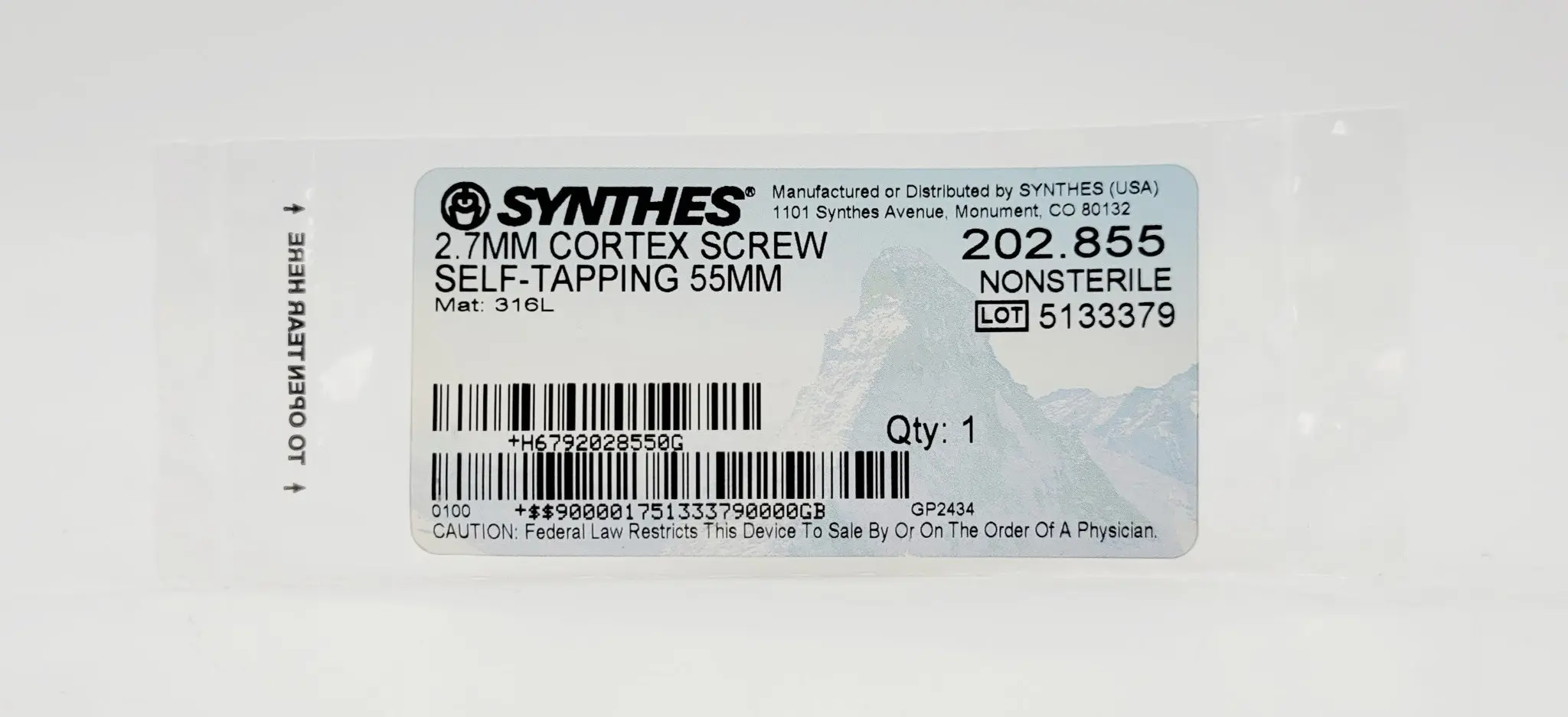
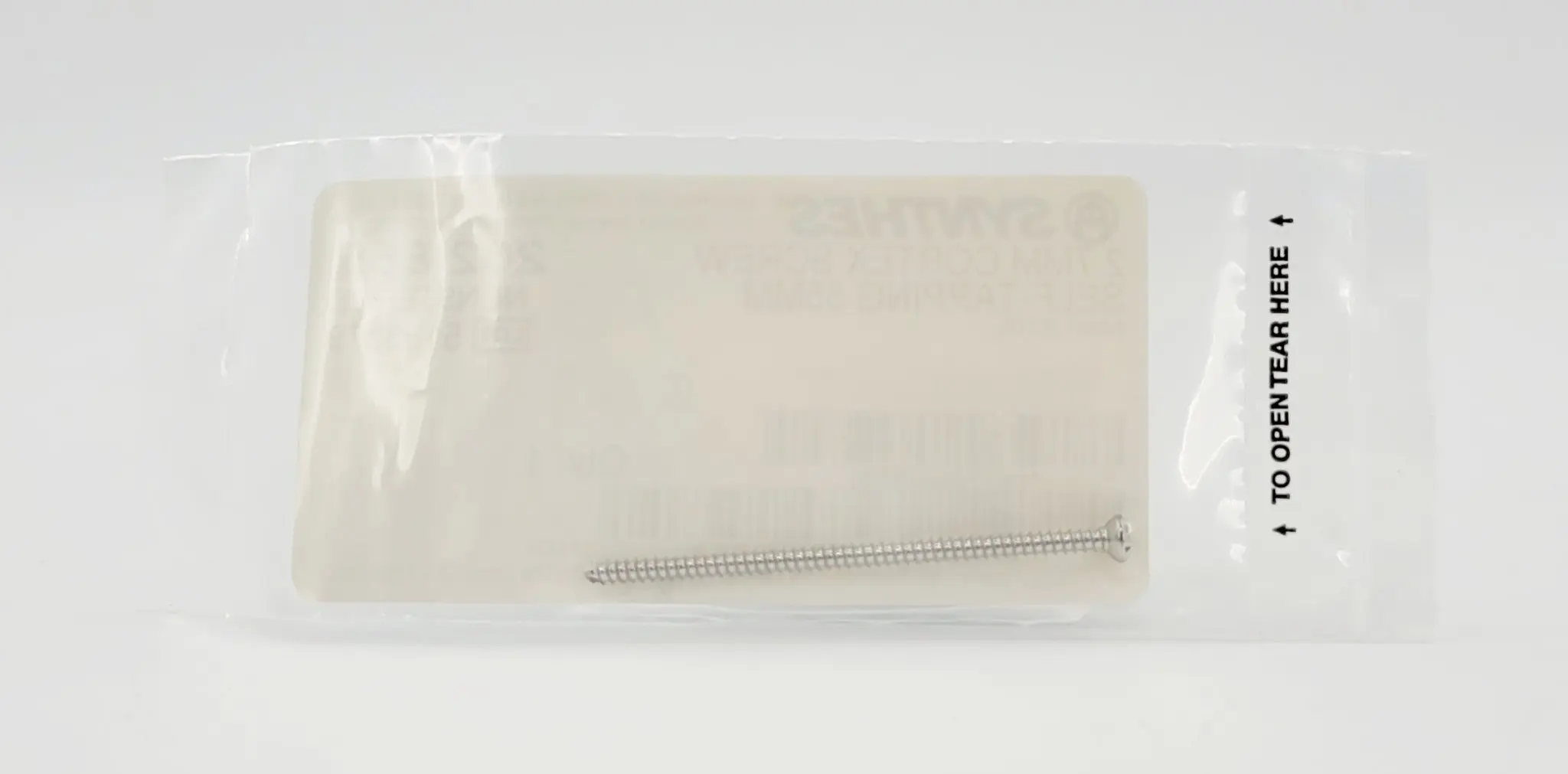
Synthes 202.855 2.7mm Cortex Screw Self-Tapping 55mm
• Model: 202.855
• 2.7mm
• A small, non-sterile, threaded rod with a slotted head typically used for internal orthopedic fracture fixation by being screwed into bone to hold plates or nails to bone or to provide direct interfragmentary stabilization of bone, or it may fasten soft tissue to bone;
• It is made of a material that cannot be chemically degraded or absorbed via natural body processes (includes an implant-grade metal such as surgical steel, titanium alloy, or carbon fiber).
• Screws available are: cortical, cancellous, malleolar, scaphoid, partially-threaded and fully-threaded, self-tapping, and cannulated.
• A "lag screw" can be any of these used to obtain compression.
• This device must be sterilized before use.
The Synthes 202.855 2.7 mm cortex screw is a robust solution for surgeons needing reliable bone compression using DCP or LC-DCP plating techniques. With its self‑tapping design, the screw eliminates the need for pre-tapping steps, resulting in faster implantation and less instrument exchange—essential in time-sensitive trauma or fracture cases. The moderate 55 mm length and 2.7 mm diameter offer ample purchase in both cortical and cancellous bone without being overly invasive.
This screw is engineered to deliver excellent anchorage. Its 1.9 mm core adds structural integrity, while the 1 mm thread pitch enhances grip within the bone. The spherical 5 mm head provides optimal load distribution through plates, and the small hexagonal socket ensures consistent tool engagement during insertion and removal—reducing slippage and preserving surgical accuracy.
Made from high-quality stainless steel, the 202.855 screw offers dependable performance even after repeated sterilization. The combination of precision design, rapid self‑tapping capability, and strong metallurgy makes it a go-to in orthopedic settings. Whether used in trauma repair or planned reconstructive procedures, it represents a well-balanced implant solution for surgeons seeking both reliability and procedural efficiency.

Details & Craftsmanship
Every detail has been carefully considered to bring you the perfect product.
Details & Craftsmanship
Every detail has been carefully considered to bring you the perfect product.
Description
Synthes 202.855 2.7mm Cortex Screw Self-Tapping 55mm
• Model: 202.855
• 2.7mm
• A small, non-sterile, threaded rod with a slotted head typically used for internal orthopedic fracture fixation by being screwed into bone to hold plates or nails to bone or to provide direct interfragmentary stabilization of bone, or it may fasten soft tissue to bone;
• It is made of a material that cannot be chemically degraded or absorbed via natural body processes (includes an implant-grade metal such as surgical steel, titanium alloy, or carbon fiber).
• Screws available are: cortical, cancellous, malleolar, scaphoid, partially-threaded and fully-threaded, self-tapping, and cannulated.
• A "lag screw" can be any of these used to obtain compression.
• This device must be sterilized before use.
The Synthes 202.855 2.7 mm cortex screw is a robust solution for surgeons needing reliable bone compression using DCP or LC-DCP plating techniques. With its self‑tapping design, the screw eliminates the need for pre-tapping steps, resulting in faster implantation and less instrument exchange—essential in time-sensitive trauma or fracture cases. The moderate 55 mm length and 2.7 mm diameter offer ample purchase in both cortical and cancellous bone without being overly invasive.
This screw is engineered to deliver excellent anchorage. Its 1.9 mm core adds structural integrity, while the 1 mm thread pitch enhances grip within the bone. The spherical 5 mm head provides optimal load distribution through plates, and the small hexagonal socket ensures consistent tool engagement during insertion and removal—reducing slippage and preserving surgical accuracy.
Made from high-quality stainless steel, the 202.855 screw offers dependable performance even after repeated sterilization. The combination of precision design, rapid self‑tapping capability, and strong metallurgy makes it a go-to in orthopedic settings. Whether used in trauma repair or planned reconstructive procedures, it represents a well-balanced implant solution for surgeons seeking both reliability and procedural efficiency.