
Original: $50.00
-65%$50.00
$17.50The Story
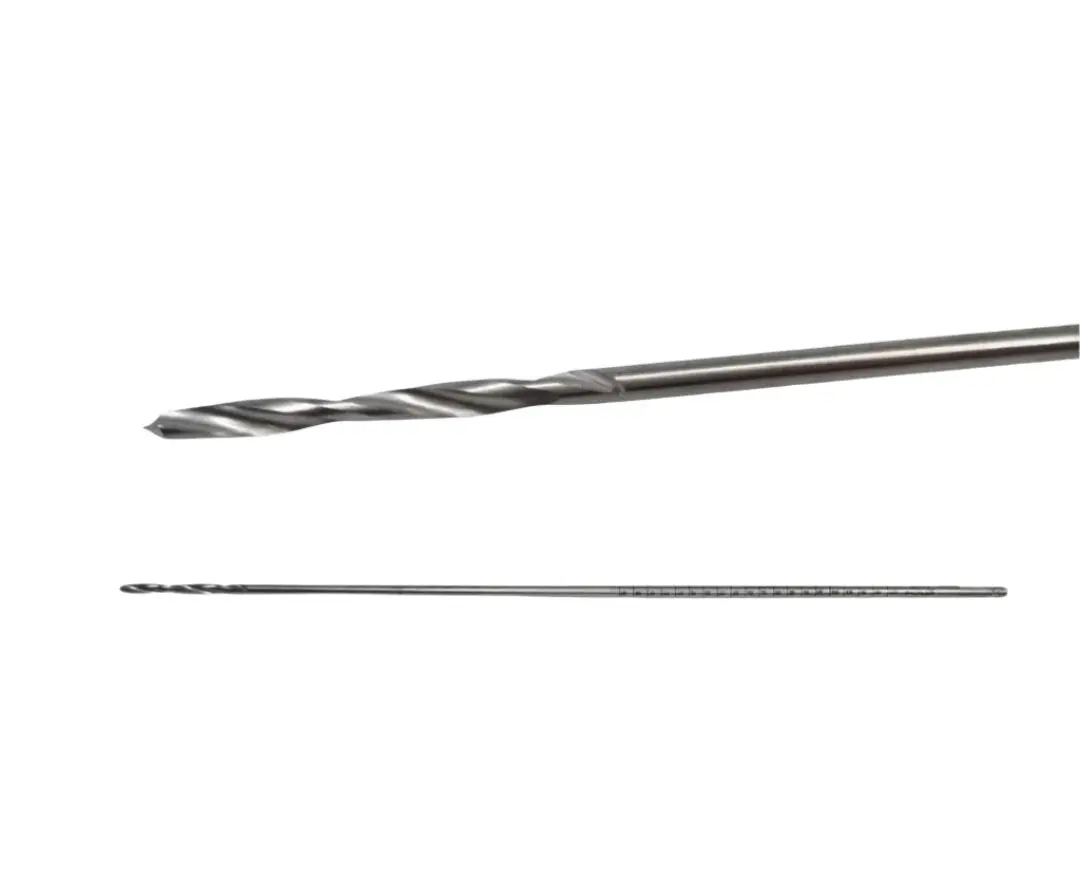
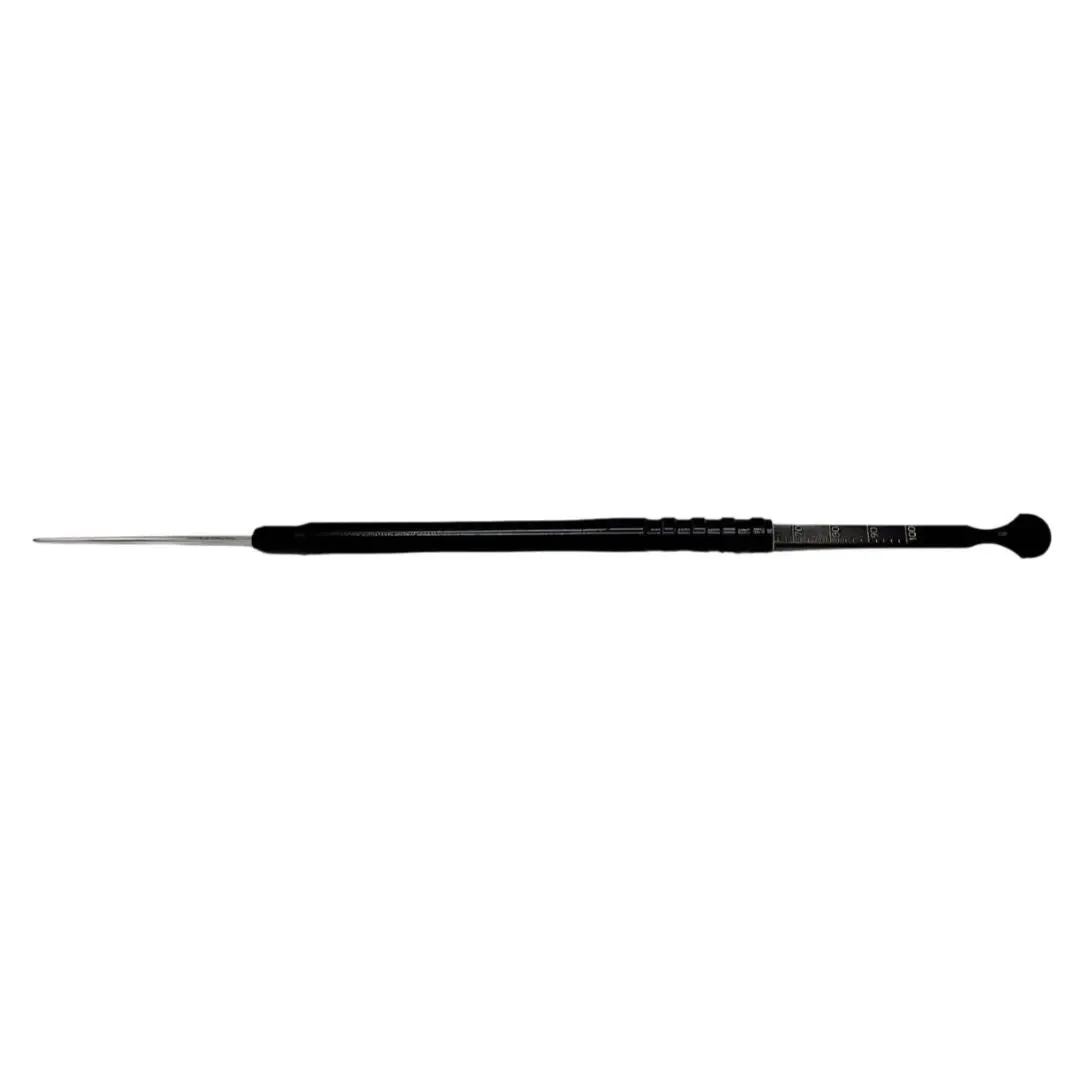
Synthes 319.17 Orthopedic Cannulated Measuring Device 9-3/16"
• Model: 319.17
• for a 4.5mm
• Overall Length: 9-3/16 inches
The Synthes 319.17 Measuring Device is a relatively simple but essential instrument in the 4.5 mm cannulated screw system. Its primary role is to help the surgeon determine the exact length of screw needed after drilling is done but before the actual screw is inserted. It is used by advancing it over the guide wire (which has been placed in the intended trajectory), to touch or approach the bone surface or target point, then reading off measurement markings (or using calibrated distance) to match with the screw length scale. This helps ensure that the screw is long enough for secure fixation but not so long as to protrude beyond bone or joint, minimizing risk of soft tissue irritation or other complications.
In design, the measuring device must be cannulated (i.e. have a central lumen) so it can slide over the guide wire used in the cannulated screw technique without displacing the wire. It needs to be rigid enough to resist flex or bending over its length, to maintain accuracy, yet fine enough to work in conjunction with the narrow guide wires and drill sleeves typical of this system. Though I couldn’t locate published values for its length, marking increments, or diameter, instruments of this type typically have calibration markings in millimeters, and are sized to accommodate the standard 4.5 mm screw system’s guide wires and sleeves.
Clinically, using the measuring device is crucial to reducing intraoperative guesswork. Without it, surgeons might overshoot or undershoot screw length, leading to screws that don’t achieve optimal purchase, or ones that protrude beyond the far cortex and irritate surrounding tissues. The device thus contributes both to surgical efficiency (by reducing trial & error) and to patient safety and effectiveness of fixation. It is used after drilling and before insertion, often under imaging (fluoroscopy) to verify depth, and fits into the surgical workflow as one of the basic and reusable instruments.
This item is used and in good condition.

Details & Craftsmanship
Every detail has been carefully considered to bring you the perfect product.

Details & Craftsmanship
Every detail has been carefully considered to bring you the perfect product.

Details & Craftsmanship
Every detail has been carefully considered to bring you the perfect product.
Description
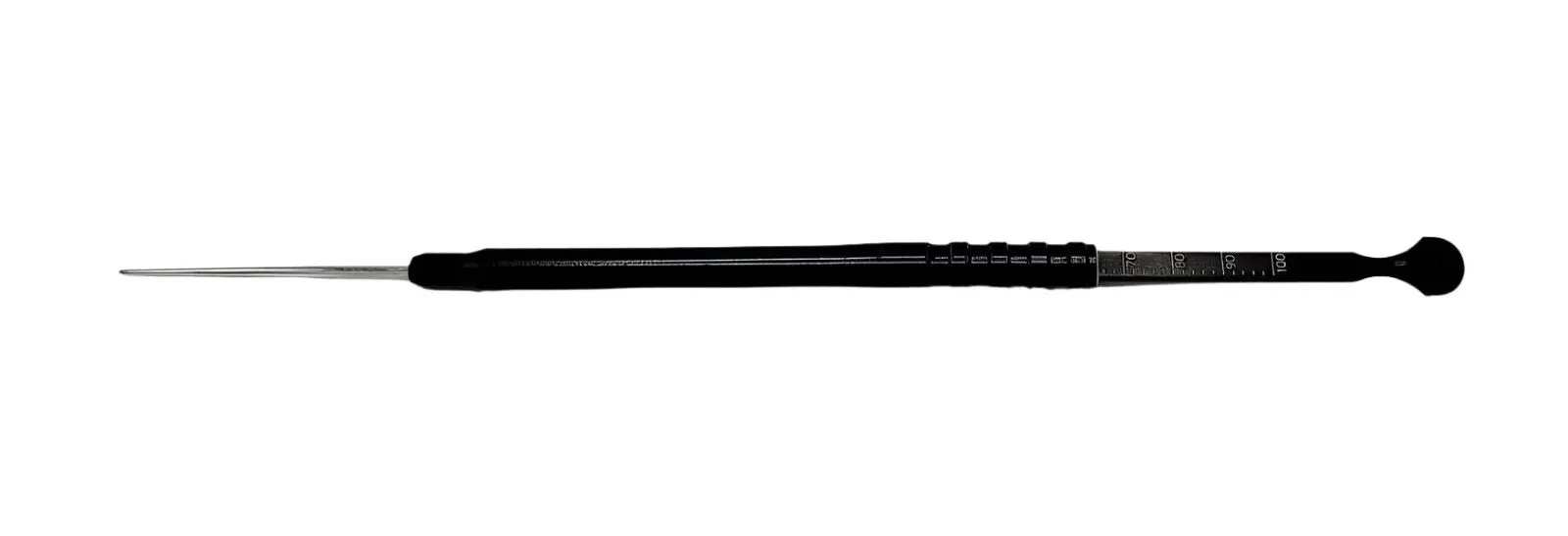
Synthes 319.17 Orthopedic Cannulated Measuring Device 9-3/16"
• Model: 319.17
• for a 4.5mm
• Overall Length: 9-3/16 inches
The Synthes 319.17 Measuring Device is a relatively simple but essential instrument in the 4.5 mm cannulated screw system. Its primary role is to help the surgeon determine the exact length of screw needed after drilling is done but before the actual screw is inserted. It is used by advancing it over the guide wire (which has been placed in the intended trajectory), to touch or approach the bone surface or target point, then reading off measurement markings (or using calibrated distance) to match with the screw length scale. This helps ensure that the screw is long enough for secure fixation but not so long as to protrude beyond bone or joint, minimizing risk of soft tissue irritation or other complications.
In design, the measuring device must be cannulated (i.e. have a central lumen) so it can slide over the guide wire used in the cannulated screw technique without displacing the wire. It needs to be rigid enough to resist flex or bending over its length, to maintain accuracy, yet fine enough to work in conjunction with the narrow guide wires and drill sleeves typical of this system. Though I couldn’t locate published values for its length, marking increments, or diameter, instruments of this type typically have calibration markings in millimeters, and are sized to accommodate the standard 4.5 mm screw system’s guide wires and sleeves.
Clinically, using the measuring device is crucial to reducing intraoperative guesswork. Without it, surgeons might overshoot or undershoot screw length, leading to screws that don’t achieve optimal purchase, or ones that protrude beyond the far cortex and irritate surrounding tissues. The device thus contributes both to surgical efficiency (by reducing trial & error) and to patient safety and effectiveness of fixation. It is used after drilling and before insertion, often under imaging (fluoroscopy) to verify depth, and fits into the surgical workflow as one of the basic and reusable instruments.
This item is used and in good condition.