The Story
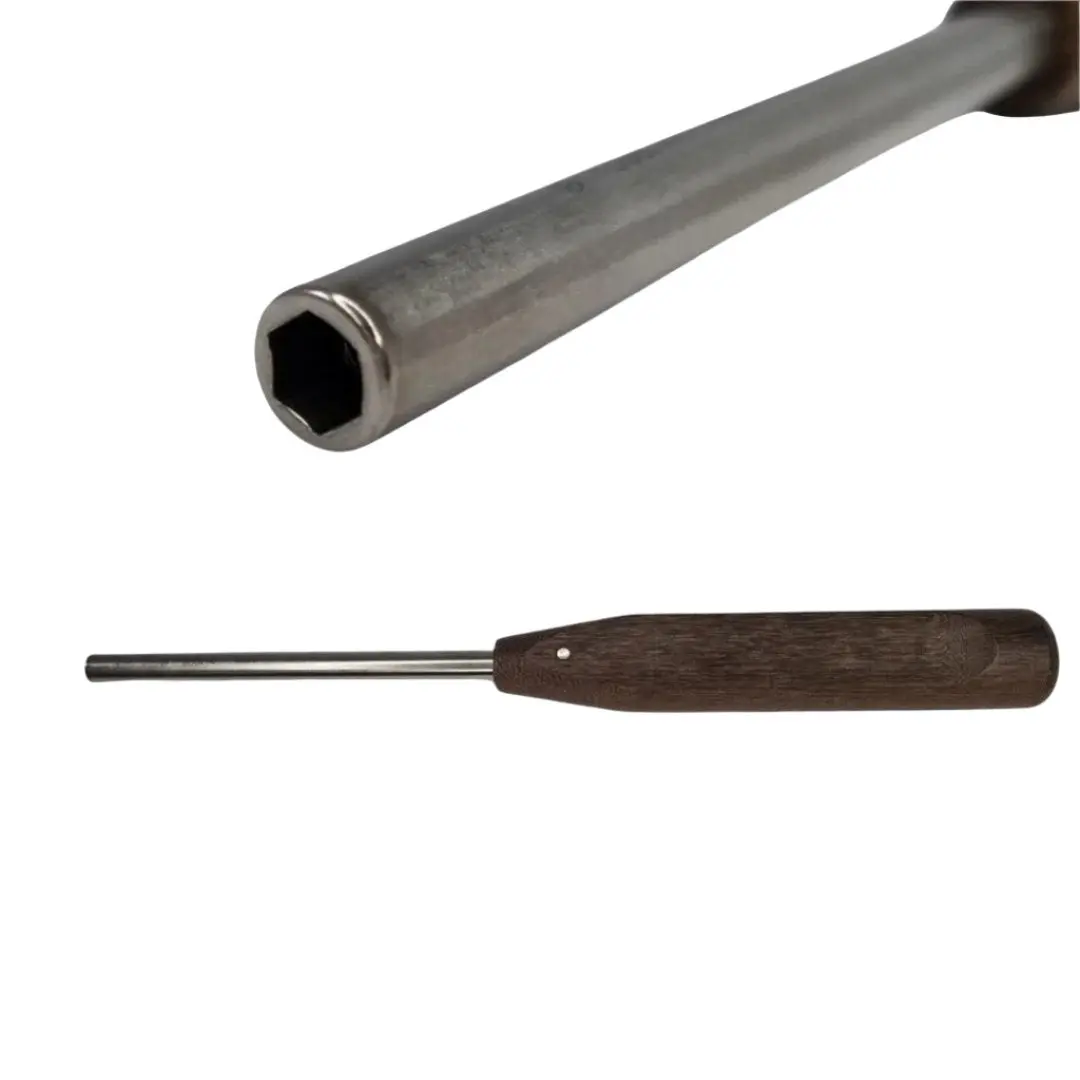
Synthes 388.14 Orthopedic 6mm Straight Handle Socket Wrench 11"
• Model: 388.14
• 6mm
• Straight
• Overall Length: 11 inches
The Synthes 388.14 6mm Straight‑Handle Socket Wrench (11″) is a surgical instrument used to apply torque to fasteners (bolts, screws) with a 6 mm head (or socket interface), particularly in spinal fixation or rod/rod‑screw constructs. Its straight shaft and socket end are designed to reach into areas that may be slightly recessed or obstructed, where a standard open wrench would not provide sufficient grip or where ratcheting tools may not fit. The extra length (11″) gives the user leverage to tighten or loosen hardware with less force, which is especially useful in implant systems that require precise torque but may become tight after implantation or bone integration.
Because it’s non‑ratcheting (i.e., a fixed socket head), the 388.14 is likely sturdily built to transmit torque without flexing, and the handle must resist twisting or bending. The 6 mm socket size suggests it’s for intermediary hardware — not the largest screws, but also not the smallest; commonly seen in spinal set bolt & clamp assemblies, rod clamps, or connecting hardware where 6 mm bolts are used. The straight handle design is simpler, fewer moving parts, which is beneficial in surgical sterilization and maintenance (less to fail or corrode).
In practical use, the 388.14 is critical when access is limited behind anatomical structures (e.g., posterior spinal rods, lamina, or when working through retractors). The surgeon needs to ensure the socket fully engages the bolt head to avoid rounding off edges. Potential drawbacks: because of its length, controlling slip or maintaining alignment can be harder; torque “feedback” may be less than that with more compact tools, so care must be taken not to overtighten. Also, the condition of the socket face (edges, wear) is important — worn sockets can slip or damage implant screws. Proper sterilization, visual inspection, and possibly having backups of such tools are part of good surgical practice.
This item is used and in good condition.

Details & Craftsmanship
Every detail has been carefully considered to bring you the perfect product.

Details & Craftsmanship
Every detail has been carefully considered to bring you the perfect product.
Description
Synthes 388.14 Orthopedic 6mm Straight Handle Socket Wrench 11"
• Model: 388.14
• 6mm
• Straight
• Overall Length: 11 inches
The Synthes 388.14 6mm Straight‑Handle Socket Wrench (11″) is a surgical instrument used to apply torque to fasteners (bolts, screws) with a 6 mm head (or socket interface), particularly in spinal fixation or rod/rod‑screw constructs. Its straight shaft and socket end are designed to reach into areas that may be slightly recessed or obstructed, where a standard open wrench would not provide sufficient grip or where ratcheting tools may not fit. The extra length (11″) gives the user leverage to tighten or loosen hardware with less force, which is especially useful in implant systems that require precise torque but may become tight after implantation or bone integration.
Because it’s non‑ratcheting (i.e., a fixed socket head), the 388.14 is likely sturdily built to transmit torque without flexing, and the handle must resist twisting or bending. The 6 mm socket size suggests it’s for intermediary hardware — not the largest screws, but also not the smallest; commonly seen in spinal set bolt & clamp assemblies, rod clamps, or connecting hardware where 6 mm bolts are used. The straight handle design is simpler, fewer moving parts, which is beneficial in surgical sterilization and maintenance (less to fail or corrode).
In practical use, the 388.14 is critical when access is limited behind anatomical structures (e.g., posterior spinal rods, lamina, or when working through retractors). The surgeon needs to ensure the socket fully engages the bolt head to avoid rounding off edges. Potential drawbacks: because of its length, controlling slip or maintaining alignment can be harder; torque “feedback” may be less than that with more compact tools, so care must be taken not to overtighten. Also, the condition of the socket face (edges, wear) is important — worn sockets can slip or damage implant screws. Proper sterilization, visual inspection, and possibly having backups of such tools are part of good surgical practice.
This item is used and in good condition.